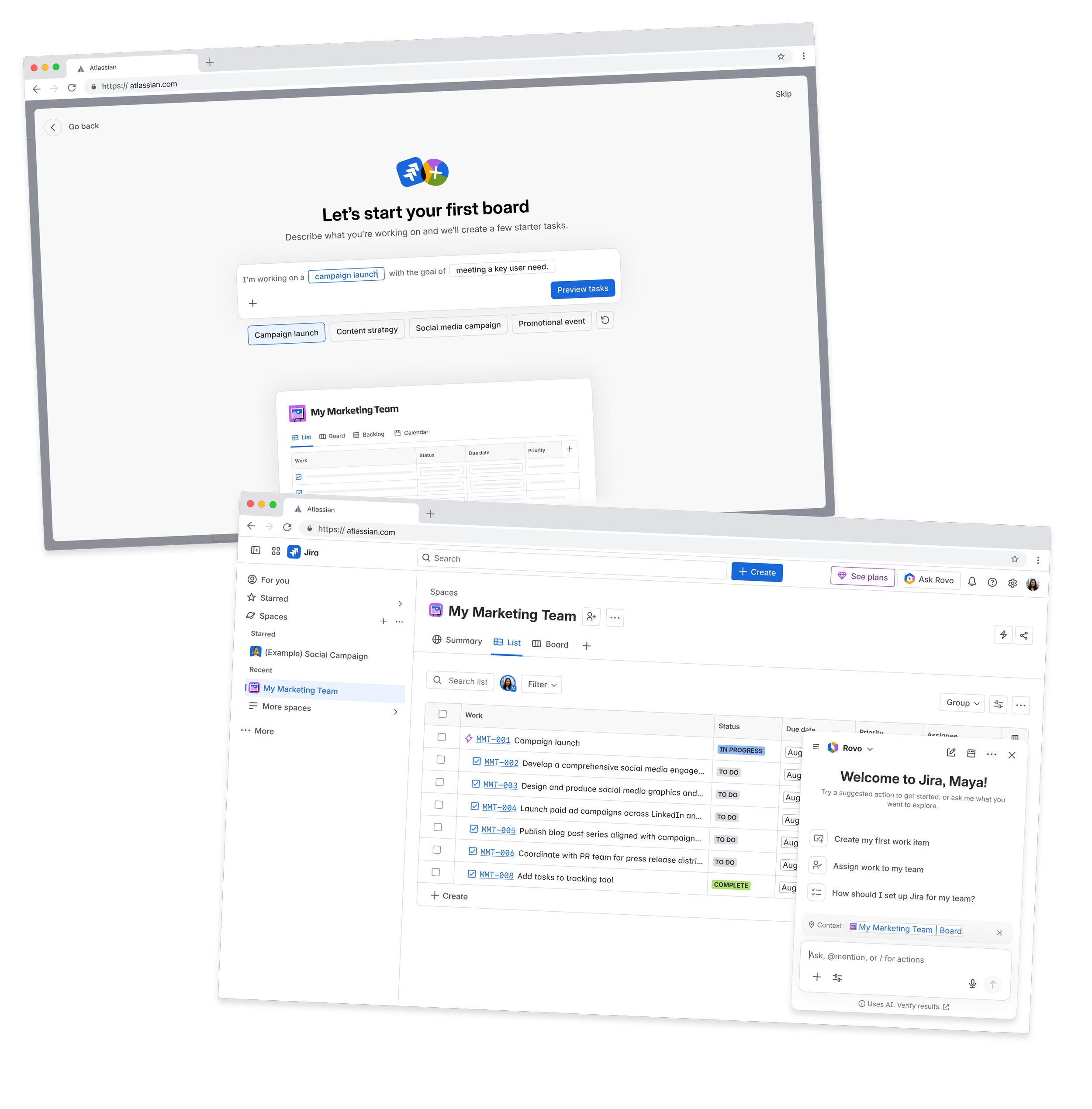
Defining the Jira Onboarding Experience with AI
Role: Lead Product Designer, owning end-to-end onboarding strategy and execution across AI-powered onboarding experiences
Team: Led design within a cross-functional group of 11 engineers, an architect, and a PM
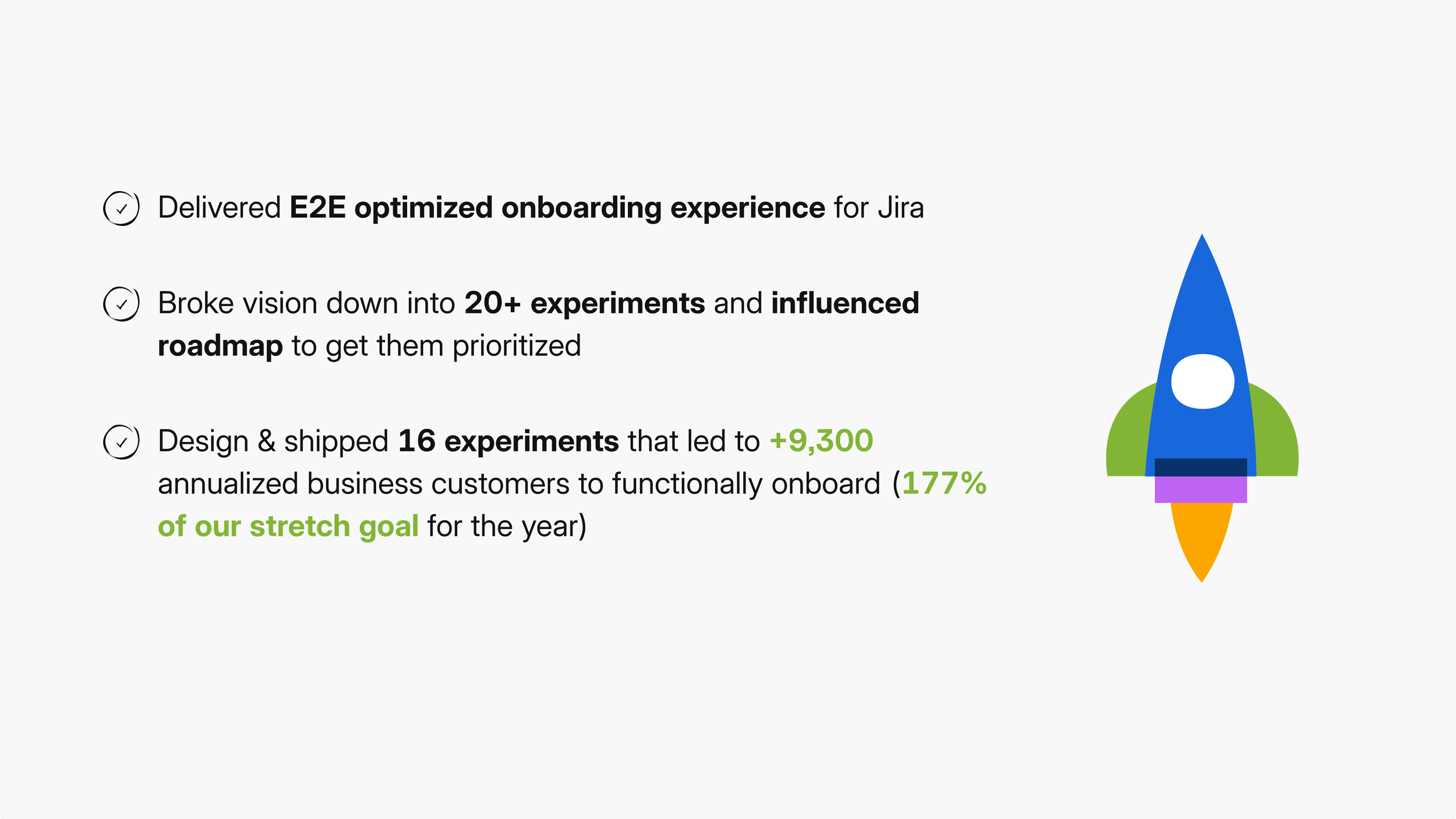
Outcomes: 16 experiments shipped → +9,300 annualized customers successfully onboarded
Timeline: October 2025 –February 2026
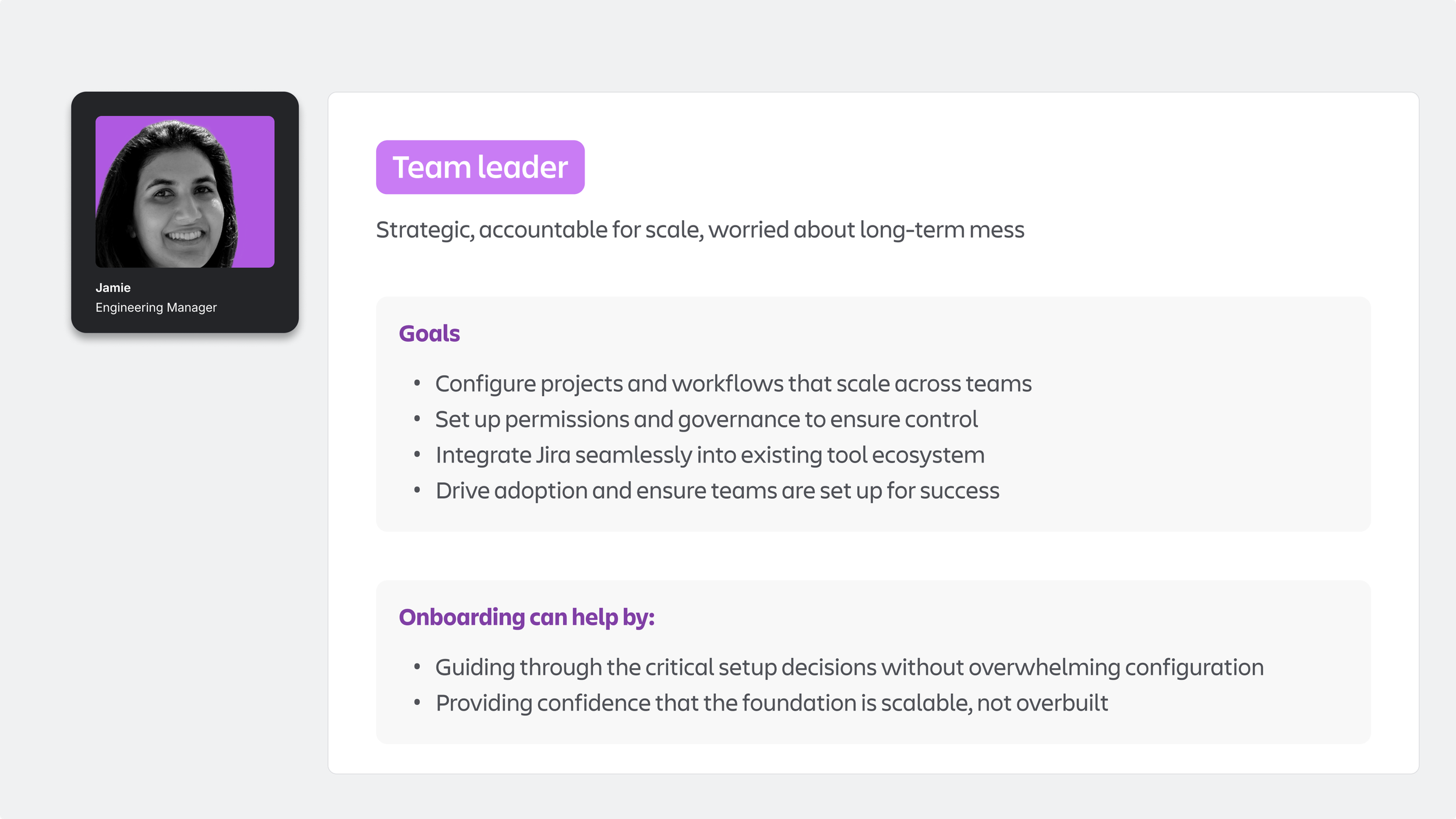
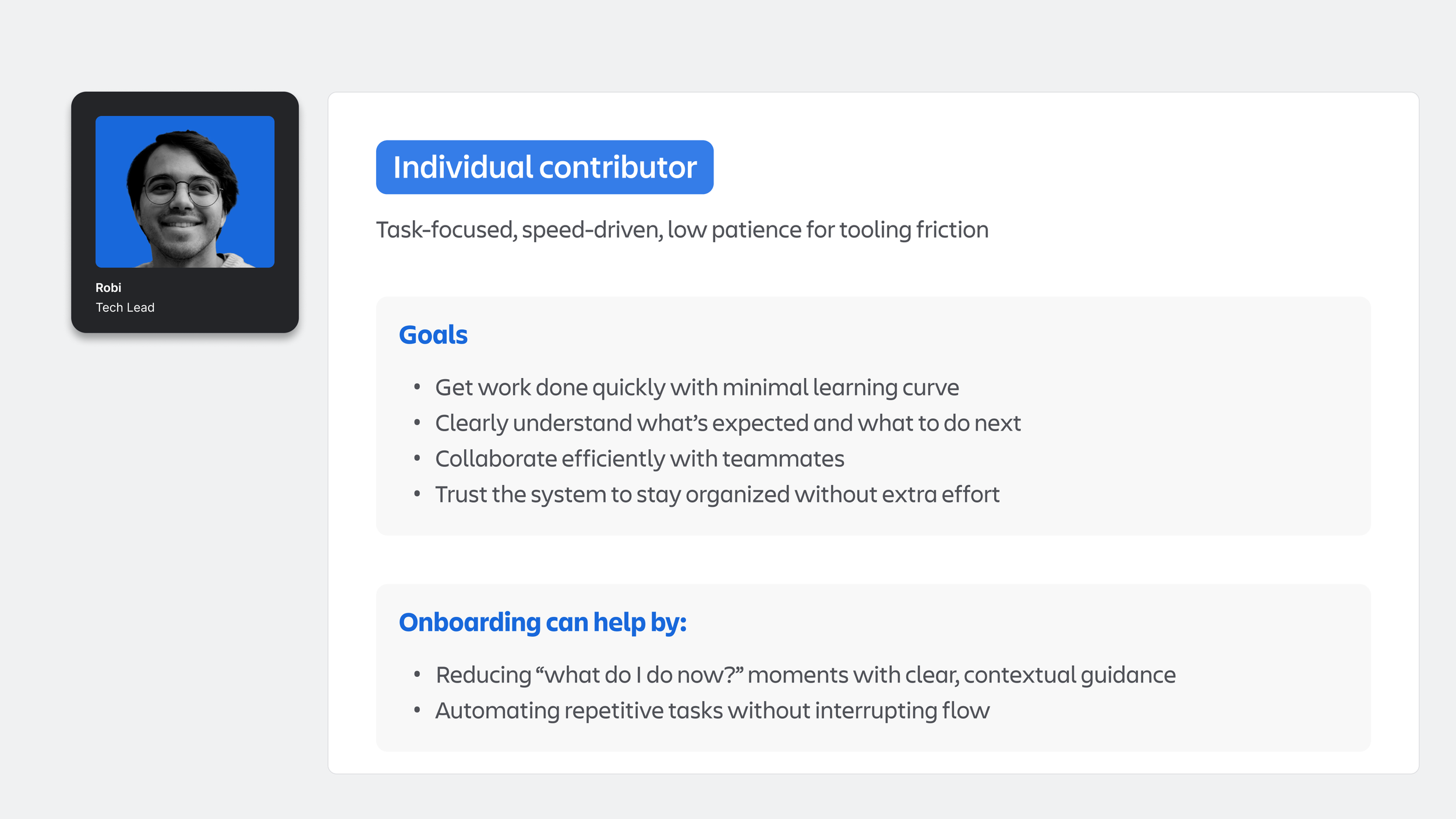
Who were we designing for?
What problems were we trying to solve?
Customer problems
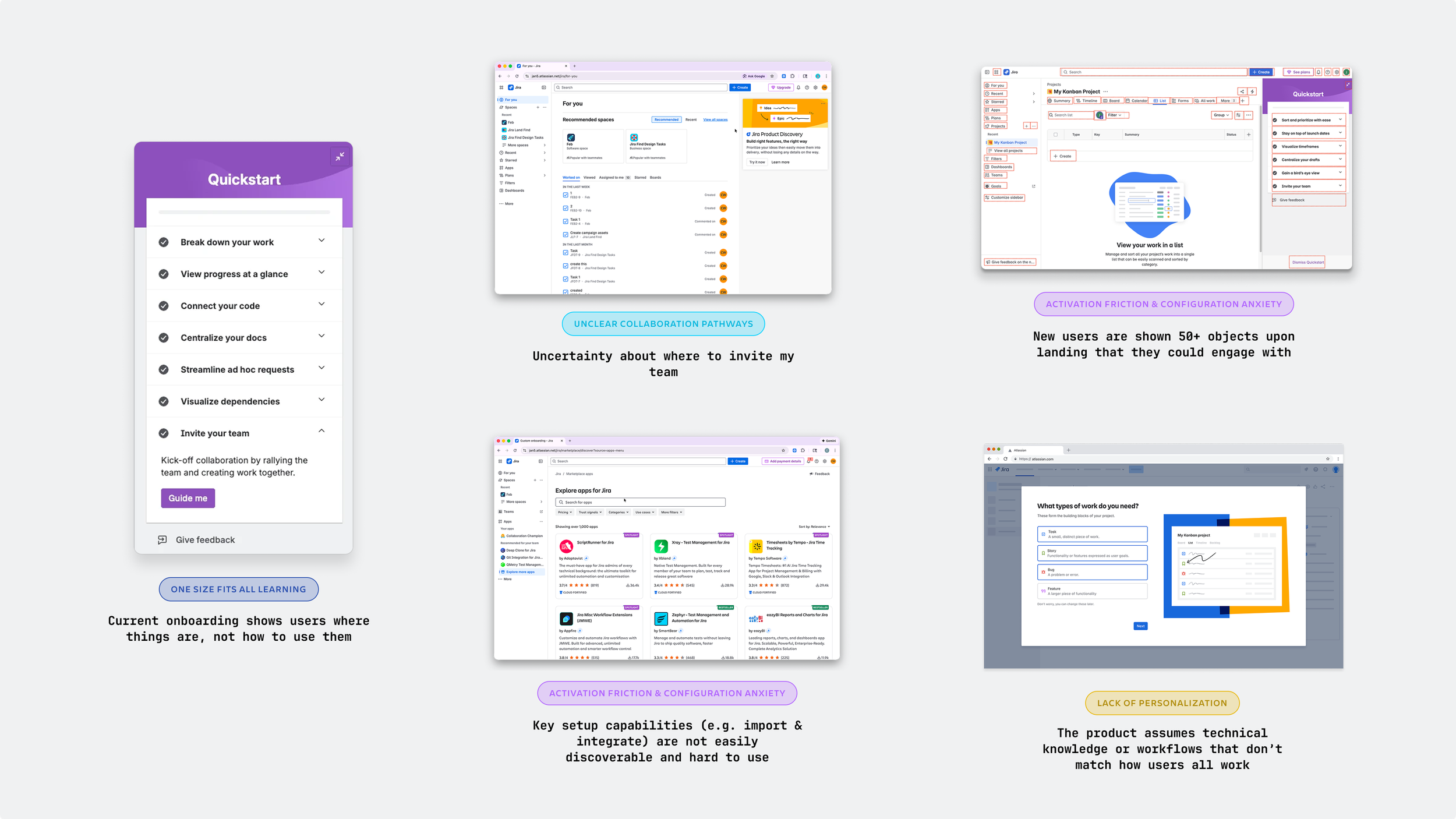
I face significant friction entering the product and taking first meaningful action (activation friction + configuration anxiety).
Onboarding isn’t tailored to my role, maturity, or goals (lack of personalization).
I don’t know how or where to bring my team into this (unclear collaboration and team activation pathways).
The help doesn’t match how I learn or what I’m trying to do (one-size-fits-all learning + underwhelming AI guidance).
Business problem
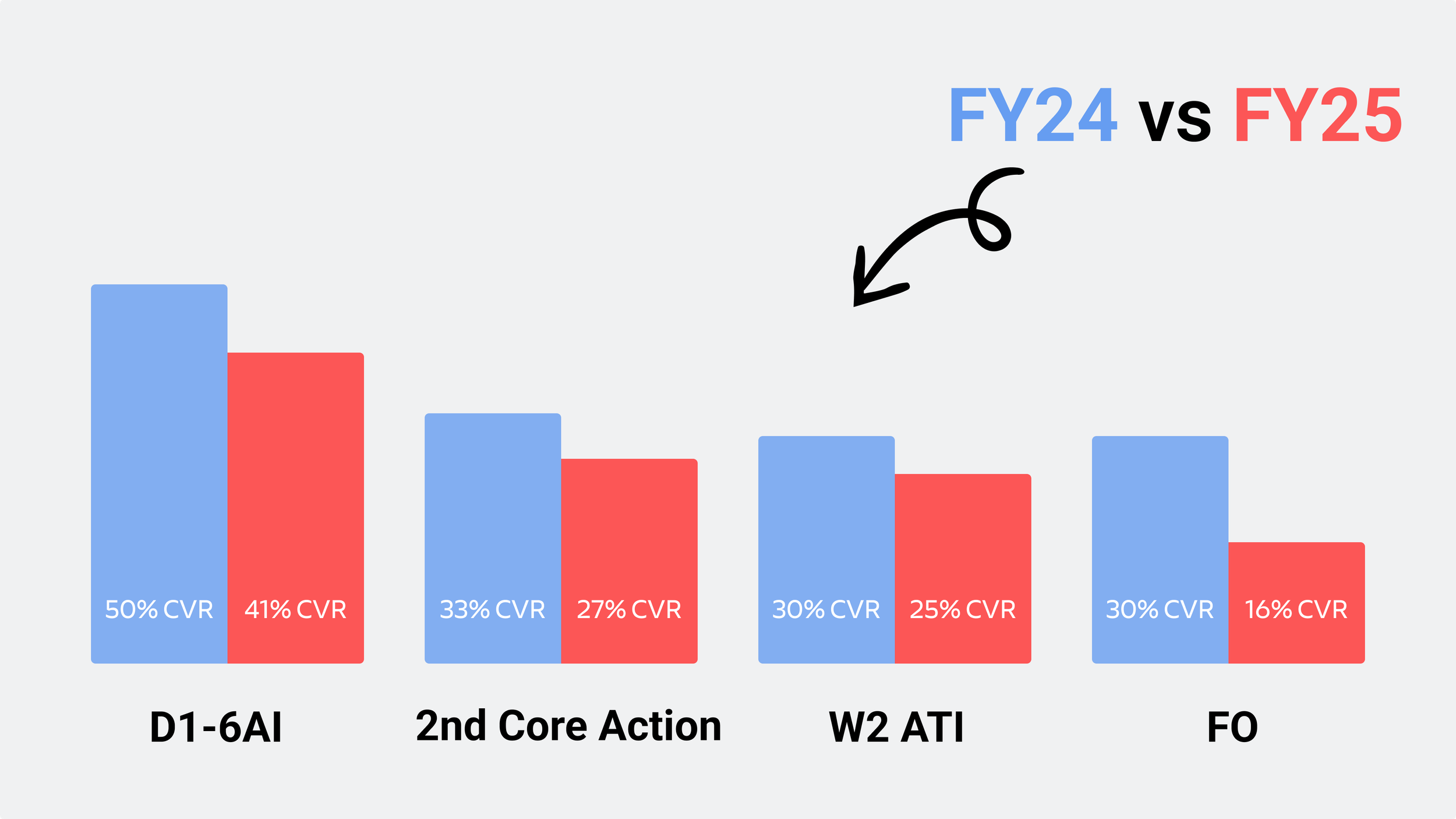
We were seeing a ~5% decline year-over-year across key metrics that indicate a user has successfully taken the core actions needed to start getting value.
Research & Key Insights

I completed sixteen customer interviews with new or non-Jira users. The goals were to:
Determine the level of guidance customers want when setting up their first space.
Clarify users' onboarding expectations.
Identify pain points in the current flow goal.
This research validated the pain points shared above, and also brought about some key insights:
Onboarding preferences vary. Some prefer a hands-off approach, while others want to be hand-held.
Customers expect the ability to integrate data from existing tools.
Customers expects an AI assistant to be available for onboarding and ongoing help.
Customers want to understand why we ask for team and workflow information.
Clarity on output and next steps is critical.
I also explored industry best practices through a competitive audit. Some of the onboarding trends I noticed and adopted into my design were:
Empty states to guide initial action
Show strong prompt examples
Highlight invite actions upfront
1 more
1 more
{visuals of comparative audit}
Experience Strategy
To move from fragmented onboarding entry points to a cohesive onboarding experience, I defined the onboarding strategy for Jira, clarifying what onboarding means, when the system should guide users, and an end-to-end journey connecting admin setup to end user value.
Onboarding via AI goals
How onboarding shows up
Level of onboarding guidance
Success criteria
Scope: 2 stages
First session (sign up, setup, explore)
Beyond first sesion, how do we guide them to get continued value, and get out of their way so they can do their work?
Experiences throughout all guide towards: helping them get work in, enrich it with AI, connect their tools, and collaborate with their team, and repeatedly continue this activation loop.
Design & Experiments
Explore variations
{insert image}
Final E2E flow
{insert images}