Designing an Accessible Art Studio
Designing for creative independence by enabling people with limited mobility to paint independently.
Role: Led user interviews and observational research; translated insights into actionable design principles; facilitated team alignment and project planning
Team: Vik Mehan, Kaitlyn Ford, Ruma Deb, Emily Goetzler, Emily Greatorex
Timeline: September 2019 - May 2020

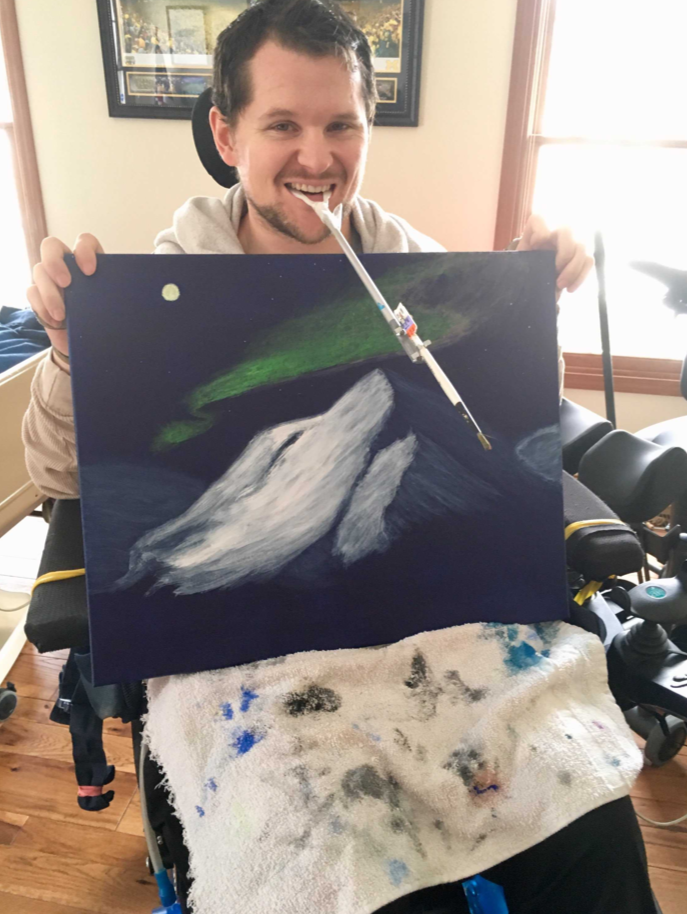
James Murtha, community partner
Context
MedLaunch is an organization on campus that partners with individuals facing healthcare challenges to design practical, human-centered solutions. Each team is matched with a community partner and tasked with addressing their needs
Our team partnered with James Murtha, a painter who became a C4 quadriplegic after a mountain biking accident. Limited mobility below James’ neck meant he now required assistance to set up his workspace before he could paint.
Our challenge was to design a system that would enable James and others with similar constraints to prepare their paint supplies independently.
This challenge is shared by 5.4 million Americans living with paralysis.
Problem statement
Quadriplegics and others with limited mobility of their arms need a solution that will enable them to set up their paint supplies independently.
Contextual research & insights
We spoke with James to learn more about his condition and exact needs. We also visited his home multiple times to observe how he normally sets up his studio and paint.
My observations revealed that James’s primary barrier was not the act of painting itself, but paint setup and access. This insight became a design focal point for the rest of the project.
When we conducted market research, we found that there was no existing art studio tool in the market that would enable quadriplegics to paint independently.
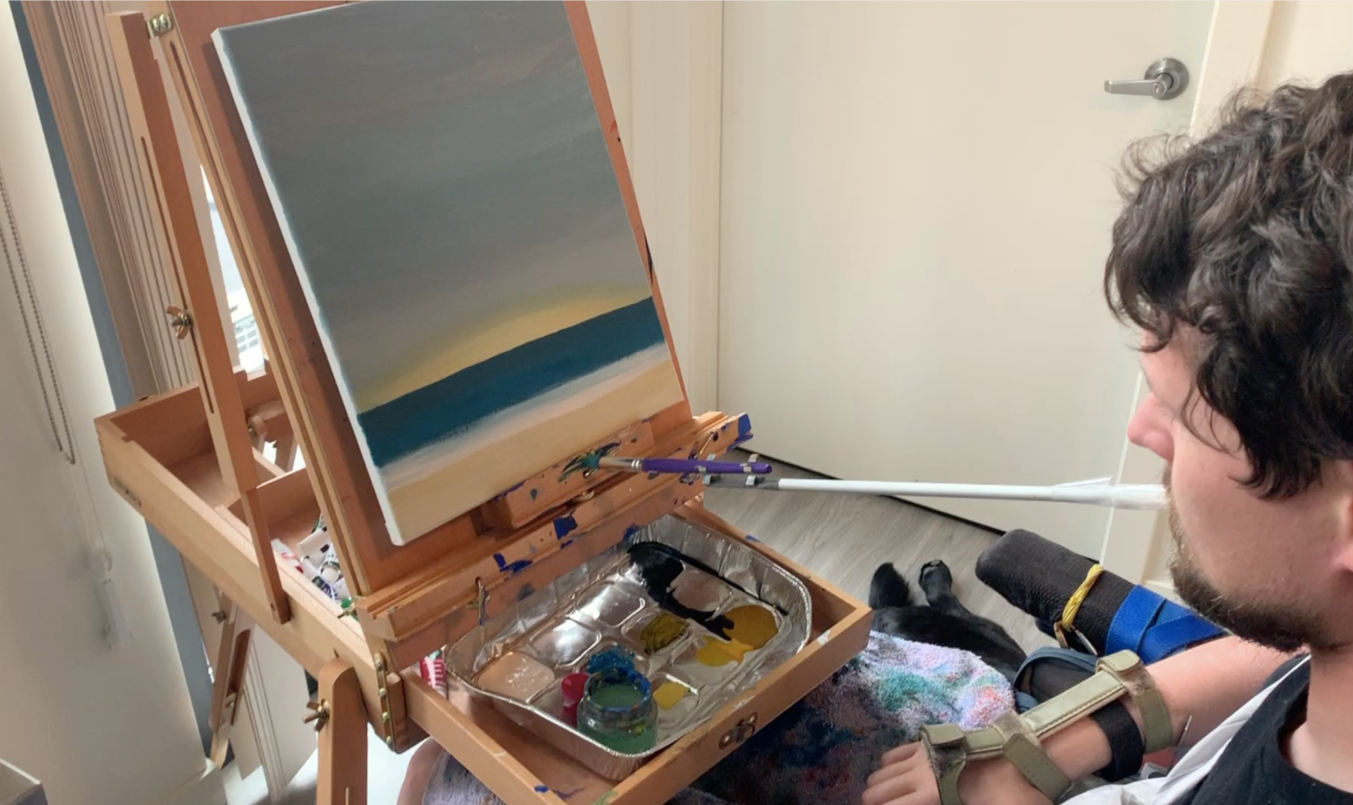
James preparing his studio setup and painting during observational research
Design principles

Ideation and initial sketches
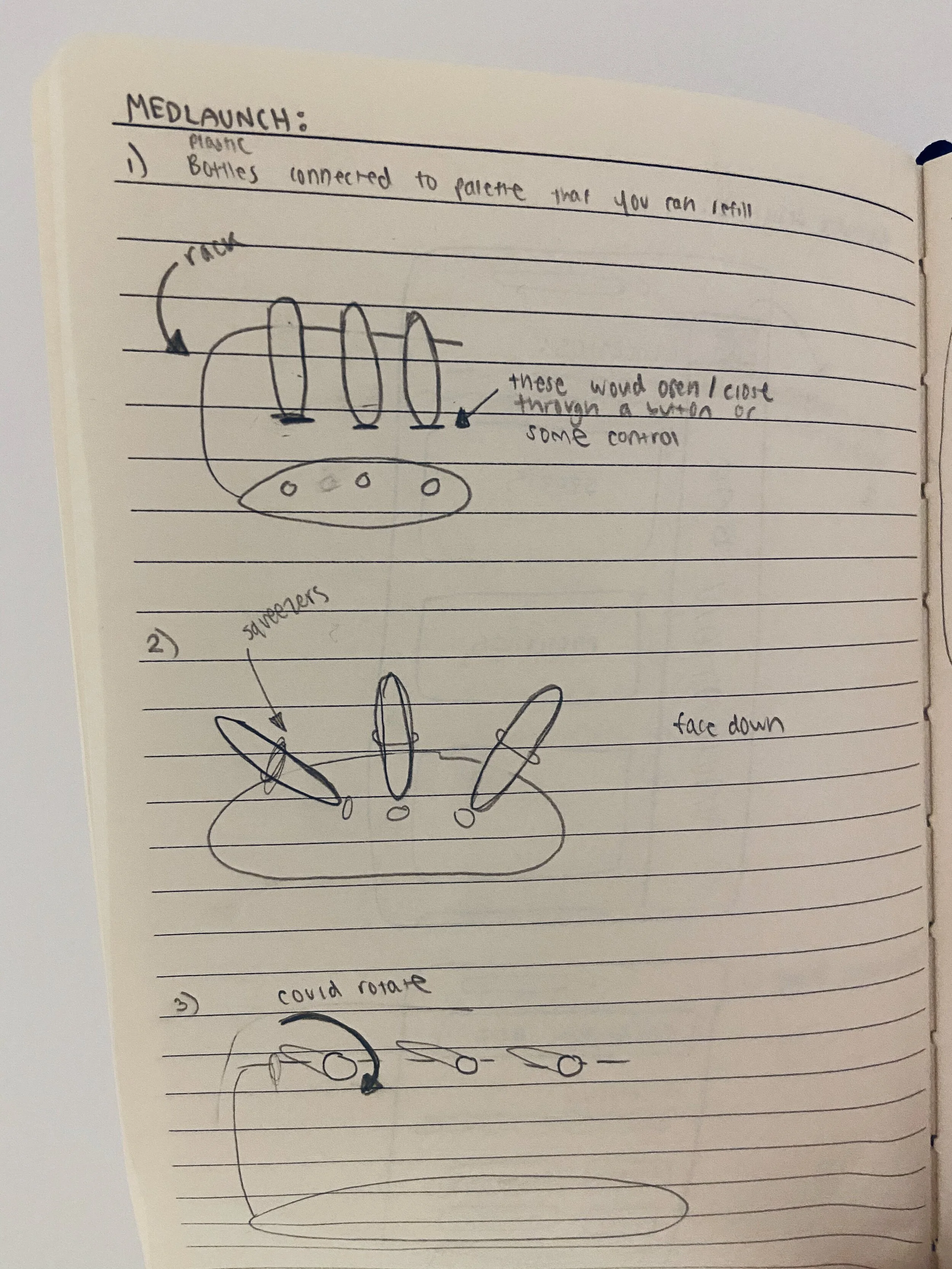


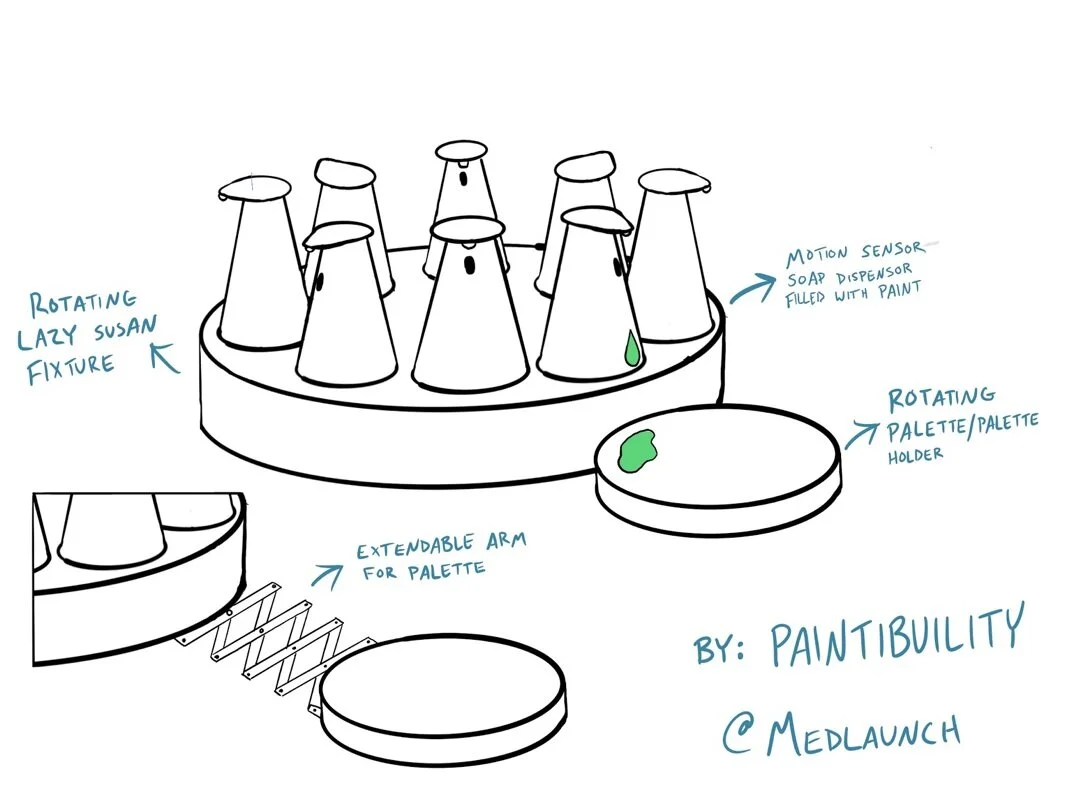

Design iteration #1
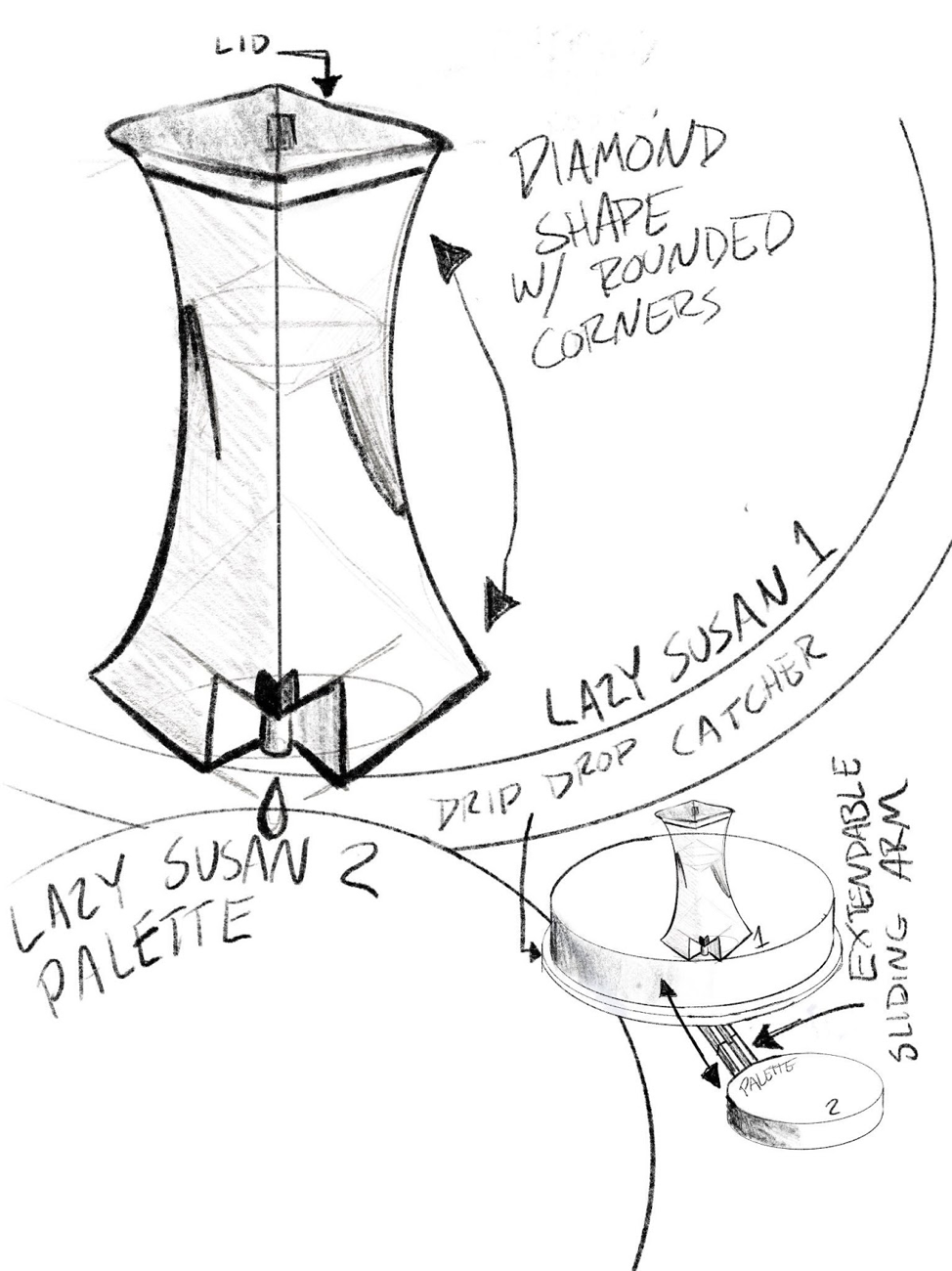
James uses acrylic paint, thus with our initial sketch, we realized the paint would likely dry up on the surface that opened the tubes that held the paint. We also realized that because the paint was thick, gravity alone would not force the paint out of the tubes.
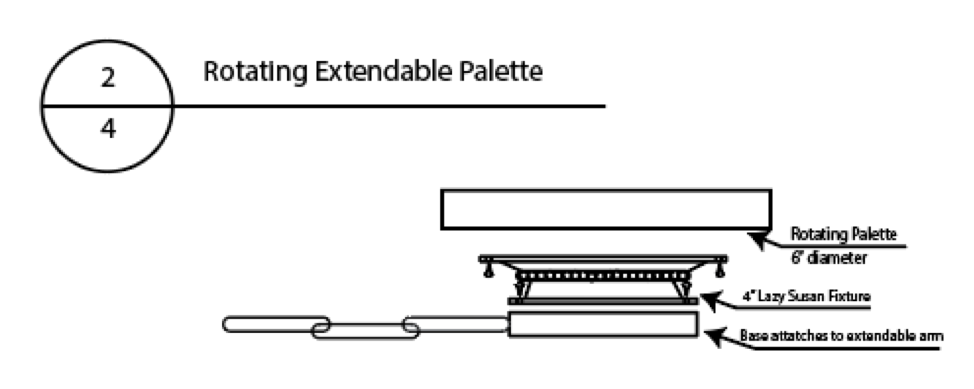
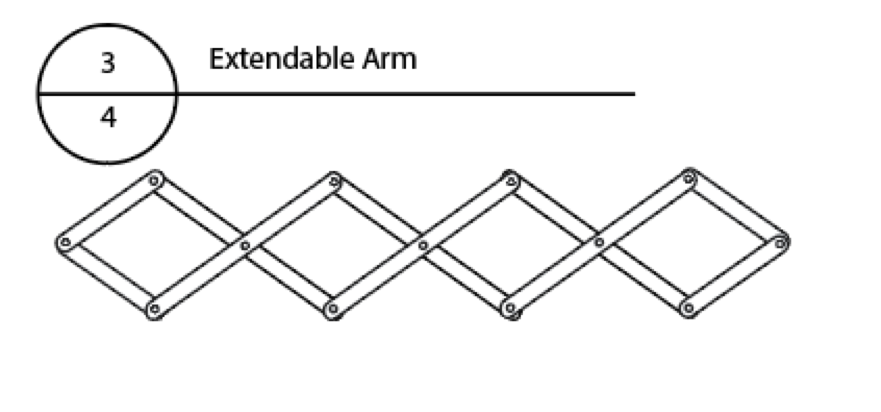
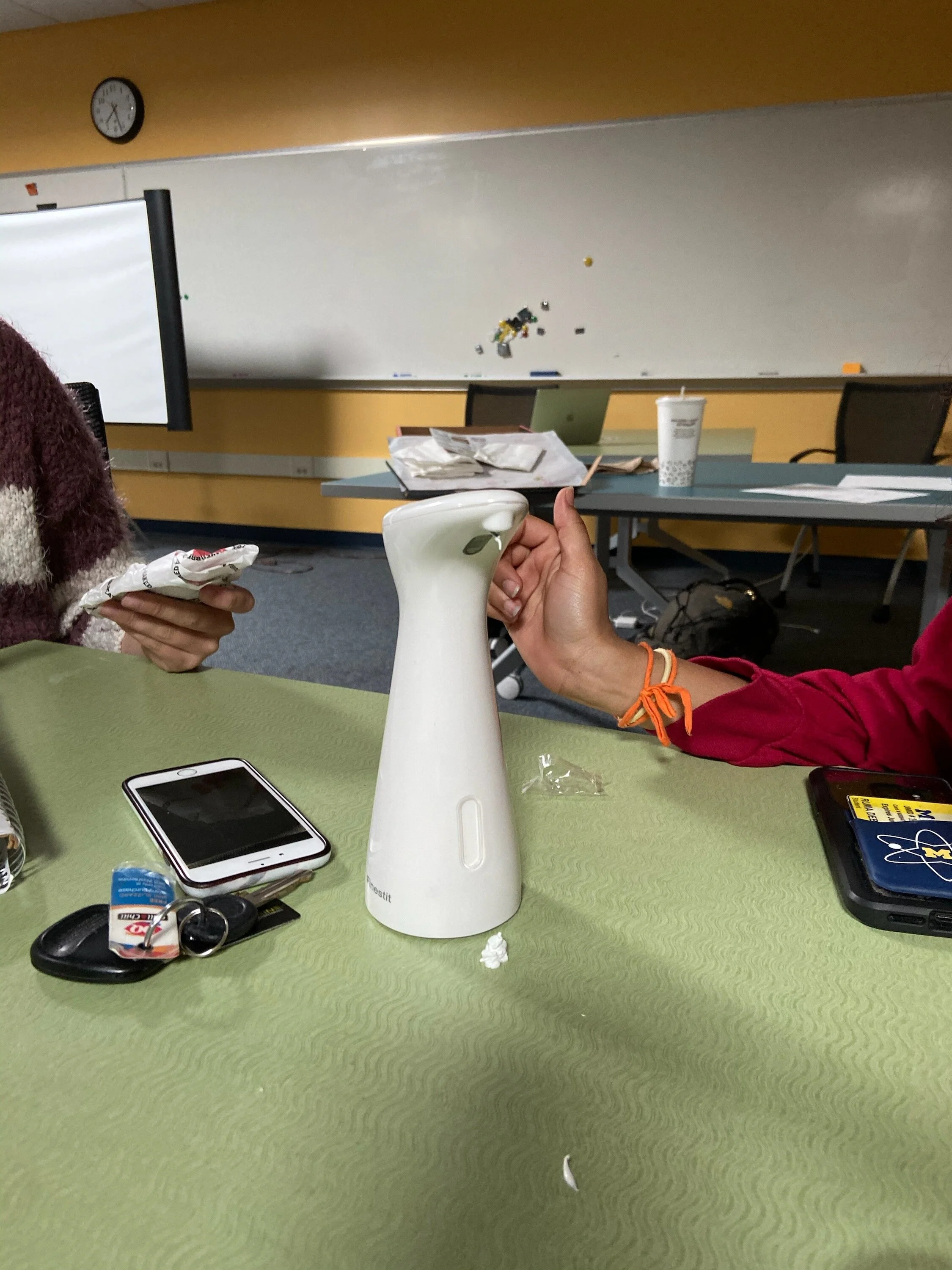
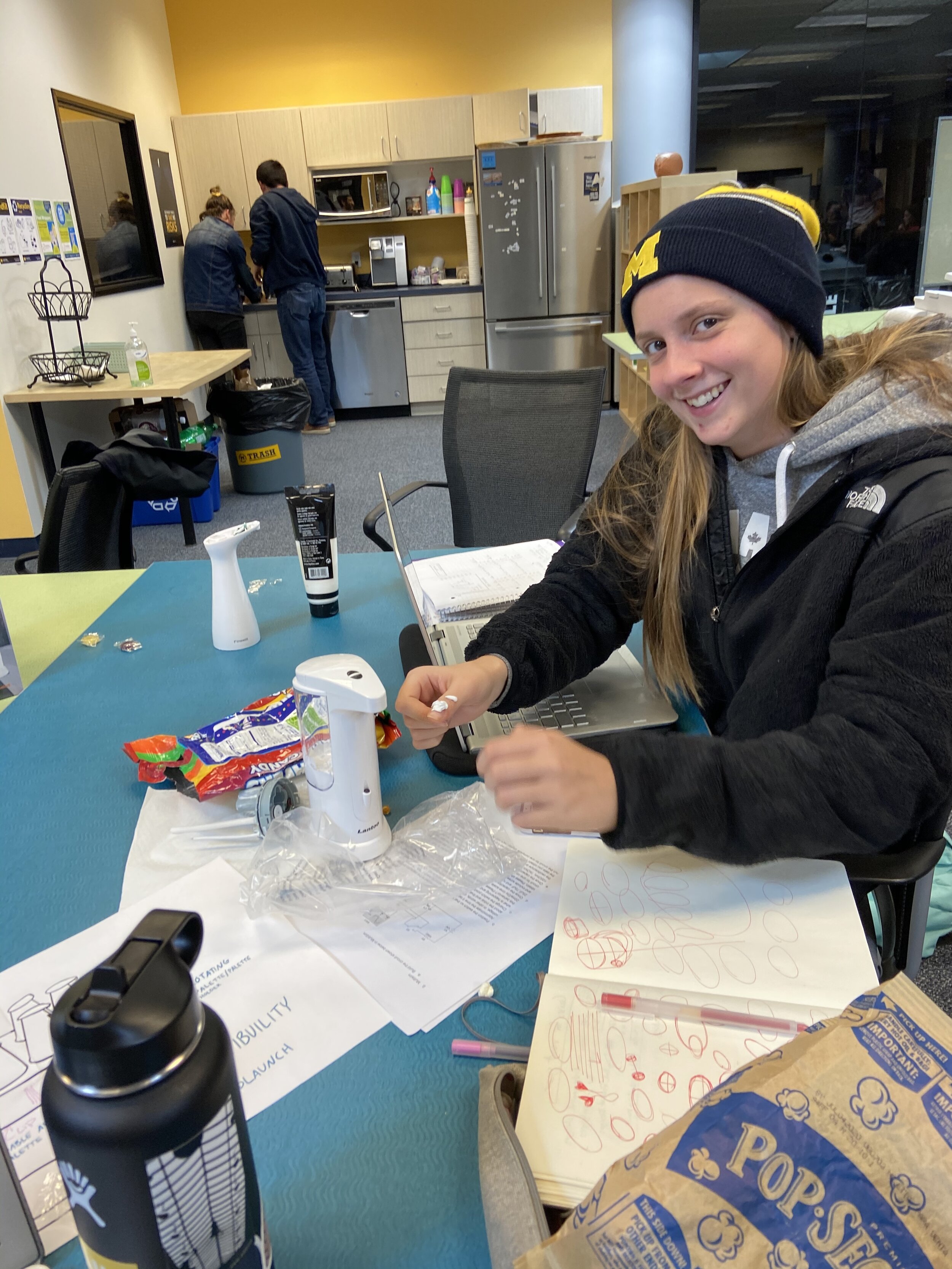
Thus, with the design constraints in mind, we decided to experiment with automatic soap dispensers as a solution to distribute the paint on a pallet. We envisioned that the dispensers would be placed on a rotating lazy suzan stand with a palette attached to it by an extendable arm.
Iteration #1 testing:


Iteration #1 testing results:
Points of friction
Acrylic paint was too thick to travel up any manufactured automatic soap dispensers.
Some manufactured soap dispensers were poorly made, unreliable, and inconsistent. They could easily cause a mess.
Feedback from James and other experts
James mentioned that he wanted ridges on the side of each pallet, which will provide a way for him to grip and turn them easier.
James also said that he desired a drip catcher underneath the paints to catch any excess paint that falls.
One professor suggested that motion sensors are too faulty and we should start our design with regular soap pumps as an alternative.
Another expert advised that we connect all the sensors together with an electronic wire.
Design iteration #2
Our second design still used a carousel, but instead of motion sensors, we planned to use buttons on top of our dispensers.
Also, we flipped the dispenser. Instead of paint being pumped from the bottom to the top as in a soap dispenser, we decided that we could pump the paint out of the bottom of the bottle by increasing the air pressure in the top and adding a tube at the bottom for the paint to come out.
This design used a mini air pump to push air in the top, which would increase the air pressure in our bottle and force paint out of the tube at the bottom.
Iteration #2 testing:


Iteration #2 testing results:
While the dispensing mechanism successfully pushed paint through the system, we identified leakage at the base of the tube during testing. Even small amounts of excess paint posed a usability issue, introducing the risk of mess and cleanup challenges. This became the next constraint we needed to address.
Design iteration #3
In our most recent iteration, we used the dispenser design with improvements to prevent leaks by adding a solenoid valve. It only opens when the mini air pump is running. It closes when the air pump stops running in order to prevent excessive paint from leaking out.
We met with James again to gain his input. In our meeting with him at his parents’ home, we decided on proper heights for the stand. We also confirmed the buttons and palettes in our design. We decided to remove the carousel and rotating feature and make this a static design of 6 dispensers in a 3x2 grid pattern, as the carousel would have taken up more space than was necessary.
We planned to have 6 dispensers in a portable box which can be plugged into a wall outlet to power the pumps and valves. Each dispenser would have a button on top of it so that James can hit the button of whichever color he wants and the paint will dispense as long as he holds the button down. The paint would dispense into a disposable aluminum palette and be able to be pulled out from a drawer underneath the dispensers so that James can bring the paint to his canvas.


Impact
The prototype served as a proof of concept, demonstrating feasibility and informing future iterations.
The structured design principles and requirement definition process we introduced became a model for future MedLaunch teams working with community partners.
This project strengthened my ability to translate contextual research into tangible design constraints.
Challenges
Aligning on design direction. Communicating early concepts verbally proved difficult. We found that quickly sketching and using a shared whiteboard significantly improved clarity and alignment, allowing us to converge on ideas more efficiently.
Navigating remote constraints. COVID-19 limited our ability to collaborate in person and restricted access to fabrication tools such as 3D printers and power equipment. This required us to adapt our workflow and rethink how we prototyped and tested the physical model.
Key takeaways
Applying design thinking beyond digital products. Whether designing software or physical systems, grounding decisions in real user behavior and constraints is essential. This project challenged me to apply familiar UX methods to tangible materials, spatial constraints, and mechanical interactions.
Validate requirements before prototyping. We initially moved into prototyping without fully understanding key contextual details, such as how many paints James uses, how he cleans his brushes, and how frequently he paints. This highlighted the importance of clarifying constraints early to avoid rework.
Iterate quickly to stay aligned. Multiple design pivots required rapid iteration and clear communication to ensure the solution continued to align with our community partner’s needs and the team’s goals.